

Bay of Plenty Web Design Services That Work.
Bay of Plenty web design services built for speed, mobile use, and lead generation. Get a website that works properly across every device.
A slow website costs more than patience. It costs calls, quote requests, bookings and trust - especially when someone lands on your site from their mobile, needs one answer fast, and gets friction instead.
That is why Bay of Plenty web design services should be judged on function first. Yes, visual quality matters. But for most local businesses, the real job of a website is simple: load quickly, explain what you do, show why you are the right choice, and make it easy for people to contact you from any device.
What good Bay of Plenty web design services actually do
A good website is not just a digital brochure. It should support a business process. For a tradie, that might mean more quote requests from mobile users. For a legal office, it might mean guiding people to the right service page and contact form. For a clinic, it might mean reducing drop-off between search and booking.
That changes how the work should be approached. Design is part of it, but not the whole job. The better approach is to build around user behaviour, page speed, search visibility, and conversion paths.
In practical terms, that means clear headings, short paths to enquiry, readable content, tap-friendly buttons, and layouts that hold up on phones, tablets and desktop screens. It also means keeping the site stable after launch. A website that looks sharp on day one but breaks after plugin updates is not doing its job.
Why responsive design matters more than extra features
Most local traffic now starts on mobile. People search while commuting, between jobs, on-site, or after hours from the couch. If a page is cramped, slow or awkward to use with one thumb, they leave.
Responsive design solves that, but only when it is properly implemented. Shrinking a desktop layout to fit a smaller screen is not enough. Content hierarchy needs to change. Navigation needs to simplify. Contact actions need to stay visible. Forms need to be easy to complete without zooming or retyping basic details three times.
This is where many websites miss the mark. They include too much on each page, rely on oversized image sliders, or bury key actions under decorative sections that add visual weight but no business value. A simpler site often performs better.
There is a trade-off here. If your brand relies heavily on visual presentation - hospitality, tourism, property, premium retail - stronger design treatment may be worth the extra build time. But even then, speed and usability still come first. Looking polished does not help if people bounce before the page finishes loading.
The local angle matters
Bay of Plenty businesses are not competing on a blank map. They are competing in local search results, local service areas and local buying habits. Someone looking for a plumber in Tauranga, a builder in Papamoa or an accountant in Rotorua usually wants a clear answer fast. They are comparing practical details - services, reviews, trust signals, availability, and how easy it is to make contact.
That means your website should reflect local intent without forcing location terms into every line. Service pages should match real search behaviour. Contact details should be obvious. Service areas should be clear. If you work across Tauranga, Mount Maunganui, Whakatane or surrounding areas, users should not have to guess.
This also affects content structure. A single generic services page may be enough for a very small operation, but businesses with multiple service lines often need dedicated pages. That gives search engines a clearer signal and gives users a faster path to the exact answer they need.
What to expect from modern Bay of Plenty web design services
If you are comparing providers, the useful question is not just how the homepage will look. Ask how the site will be built, managed and maintained after launch.
A modern web build should cover the front-end experience and the technical layer underneath it. That includes sensible platform choice, dependable hosting, update processes, performance tuning, backups, uptime monitoring and security hardening.
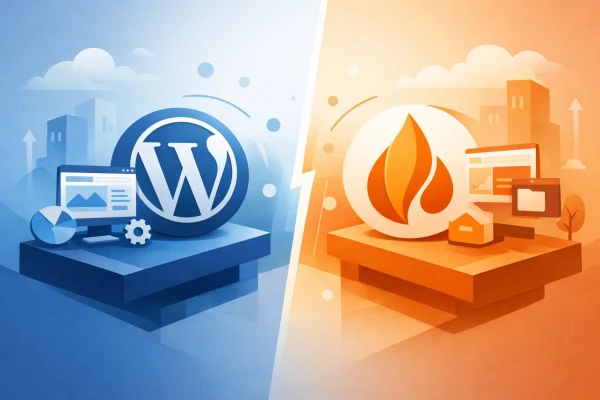
For many small to mid-sized organisations, Wordpress is a practical fit because it is flexible, familiar and efficient when set up properly. For more structured or custom-focused projects, OctoberCMS can make sense where cleaner content architecture and tailored functionality are needed. Neither platform is automatically better in every case. It depends on who will manage the site, how complex the content is, and how much custom functionality is required.
The same goes for hosting. Cheap shared hosting can look fine on paper, but often becomes a bottleneck once traffic increases or plugins stack up. A better setup usually involves managed cloud infrastructure, caching, CDN support and active monitoring. That is the difference between hoping the site stays up and actually managing it.
Design choices that affect enquiries
Small design decisions have direct commercial impact. Navigation labels affect whether users find the right page. Button text affects whether someone clicks. Form length affects whether they finish an enquiry. Even spacing and text size affect whether content feels trustworthy or hard work.
The best-performing sites usually remove choices rather than add them. They guide people to one next step at a time. Call now. Request a quote. Book an appointment. Send an enquiry. The action should fit the business model.
This matters most for service businesses. If a user has to hunt for contact details, wait on a bloated page, or decode vague wording, your competitor gets the lead. A website should reduce effort, not create it.
Trust signals also matter, but they should be placed carefully. Testimonials, project examples, accreditations and clear business details help, particularly for higher-consideration services. Too many trust elements repeated on every section can clutter the page. The goal is confidence, not noise.
Ongoing support is part of the service
A website is not finished when it goes live. Software updates, plugin compatibility, uptime checks, analytics reviews and security tasks continue in the background. Ignore them long enough and the site becomes slower, less secure and more likely to fail when you need it most.
This is where ongoing support earns its keep. Scheduled updates reduce risk. Performance reviews catch issues before rankings or conversions slip. Monitoring helps detect outages early. Monthly maintenance reporting gives business owners visibility without forcing them into technical admin.
That support layer is often what separates a one-off build from a reliable web service. If your website is tied to enquiries and revenue, maintenance is not a nice extra. It is operational.
For businesses that do not have in-house technical staff, that matters even more. You do not want to chase plugin conflicts, broken forms or SSL issues when you should be running the business.
When a redesign makes sense
Not every business needs a full rebuild straight away. Sometimes a site only needs better calls-to-action, faster hosting, a mobile layout fix, or cleaner service pages. Other times, the structure is too dated to patch efficiently.
A redesign is usually justified when the site is hard to update, performs poorly on mobile, loads slowly, or no longer reflects how the business sells. It can also be the right move if your current site gets traffic but fails to convert it.
The key is to diagnose before rebuilding. If the issue is technical debt, fix the stack. If the issue is unclear messaging, fix the content. If both are weak, a rebuild will save time in the long run.
For Bay of Plenty businesses, that practical approach matters. You do not need enterprise complexity. You need a website that works properly, is easy to maintain, and helps customers take the next step without friction.
A good web partner should be able to tell you what needs changing, what can stay, and where extra spend will actually improve results. If the advice sounds vague, bloated or too focused on trends, keep looking.
Responsive takes that same view. Build what matters, keep it fast, and support it properly after launch.
If your current site makes people work too hard, the fix is usually not more website. It is a better one.
Need a hand with something? Talk to us about web design and development.
Ngā Pōhi e Hāngai ana
 Pōhitia ki hea Paenga-whāwhā, 2026
 Pōhitia ki hea Paenga-whāwhā, 2026
 Pōhitia ki hea Poutū-te-rangi, 2026
Whakapā mai me ka hiahia kia whakaterehia ā-matihikotia tāu pakihi!
Pae tukutuku, SEO & SEM, hoahoa atahiko, taupānga kawekawe, pūtaurima pae tukutuku – kōrero mai..